Presidential Digital Talent Pogram (PDTP) -Cohort XI
They need 400 people and the deadline is Sunday 7th Sept 2026 so apply now. Runs for for 12 months. They need recent graduates from year 2024 who scored second class upper and above. The applicants will have ICT, Computer Science,software Eng, Information systems, electrical, Telecoms
If you set to graduate this year 2026 apply with a school letter showing you in the fourth year set to graduate.
only apply in their official portal; recruitment.digitalent.go.ke
2. Ministry of Water, Sanitation and Irrigation -World Bank Project
They need 65 interns. Deadline is 18th september 2026. It lasts for 12 months has paid stipends and starts in January 2027.
People applying should be aged btween 25-35. Graduated within the last two years. courses entail Geology, hydrogeology, Environmental science, Water/civil Eng,sociology,gender, GIS, Remote sensing, ICT, Data science, chemistry etc.
To apply send to hoa@rcgw.go.ke email subject should be ‘APPLICATION FOR THE HoAGW4RP INTERNSHIP 2027’
Jude is a 23 year old young man born on 29th June 2003 who has revolutionised football by taking it via storm. He is an English player playing as an elite midfielder for Real Madrid and England as a national team.
Birth Place
He was born in Stourbridge, England.
Career
He started his club career in Birmingham City from 2019 to 2020. He joined the academy at an early age and became the club’s youngest ever first-team player and goalscorer in August 2019 at age 16.
After, Jude proceeded to Borussia Dortmund years 2020–2023. Moved to the German club in July 2020, where he won the DFB-Pokal in 2021 and was named Bundesliga Player of the Season for 2022–23.
Then Real Madrid years 2023–Present, where he is currently. Transferred to Real Madrid in July 2023, wearing the number 5 shirt in honor of Zinedine Zidane. In his stellar debut season, he won La Liga, the UEFA Champions League, and the Spanish Super Cup, earning individual honors like the Kopa Trophy and Golden Boy Award.
He also debuted for England on November 12, 2020, against Ireland.
Jude represented England at UEFA Euro 2020, the 2022 FIFA World Cup (scoring his first international goal against Iran) and Euro 2024.
He went ahead during the 2026 world cup to make history as the youngest European player to feature in four major international tournaments, scoring seven goals during the 2026 campaign to set a new record for an English player in the competition.
Relationship
Jude is dating American model and social media influencer Ashlyn Castro. The two first sparked dating rumors in late 2024 after interacting on Instagram, reportedly matching on the celebrity dating app Raya. They later confirmed their relationship status in early 2025. He later shared a rare public birthday tribute to her, referring to her as “my love” and thats how it was all confirmed.
Networth
He has an estimated net worth of $50 million as of August 2026
Parents and Sibling
Jude Bellingham’s parents are Denise and Mark Bellingham whom Jude refers to them as his biggest supporters. They left their jobs so they could help manage their sons careers. Jude has one young brother called Jobe Bellingham. Jobe is also a player playing in the midfield.
Crazy Kennar’s real name is Kennedy Odhiambo. He is 27 years old as of 2026 having been born on 23rd December 1998. He is a Kenyan by nationality and a luo by tribe.
Crazy Kennar is a comedian, content creator and an enterpreneur. When it comes to comedy, he does online short skits that he posts in his social media accounts entailing IG,Facebook, Youtube etc. Here is where he also creates content that is being consumed by so many people. As an enterpreneur, he has opened a restaurant called Instant Delicacies.
Early Life
Kennedy grew up in the Lucky Summer estate in Nairobi, Kenya.
Education
He attended Sacred Heart Primary School in Baba Dogo, Nairobi and for his High School or secondary school studies he Studied at Ringa Boys High School in Homa Bay County, where his drama teacher nurtured his passion for comedic arts. For University he enrolled at the Jomo Kenyatta University of Agriculture and Technology (JKUAT) to pursue a bachelor’s degree in Actuarial Science.
Career
His Career began in 2017 when Kennar co-founded Tales of Crazy Kennar while at JKUAT University. One of his short skits went viral, catapulting him into internet stardom.What i can say led him to being a viral and loved comedian and content creator is that he blends relatable situational comedy with sharp political and social satire, addressing national governance and ordinary frustrations.
In late 2025, Kennar advanced into long-form digital cinema by writing and releasing his first feature film, Iscariot, which premiered on his YouTube channel. Kennedy has also won multiple honors, including the Comedy Influencer of the Year (2021) and Influencer of the Year at the 2022 Digital Media Awards.
Kennar is the CEO of The Crazy Kennar Company which relates with his content creation and comedy. Outside of entertainment, he opened a restaurant named Instant Delicacies. All this generates him income from his restaurant and social media accounts.
He serves as a high profile brand ambassador for major corporations operating in East Africa, including Airtel, DSTV, and Tusker which are some of the brand deals earning him another chunk of money.
Wife and Kids
He is in a long term relationship with his childhood friend, Natalie Asewe, who is a financial manager and entrepreneur and they are blessed with a beautiful baby girl who was born on August 2025 almost two years after they lost their first child, a son in 2023.
Religion
Kennar is a practicing member of the Seventh-Day Adventist (SDA) Church.
Budgeting is a topic that should be taught in primary school. But since most people aren’t taught that’s the reason I’m here. 50/30/10/10 rule makes budgeting easy to articulate and implement. 50/30/20 rule is calculated from income after tax, that is the take home money. 50% for needs, 30% for wants and 10% for savings and 10% debt repayment.
50% Needs
This entails things like rent, transportation, food, utility bills like water and electricity, insurance payments, internet etc. This are things you need to pay in order to live a comfortable life. I’ll bring an example below.
30% Wants
I love to say this is a goal account or sinking funds. This entails things like vacations, buying sofa sets, books, new curtains, new fridge etc. This is for lifestyle management so that you live and enjoy life.
10% Savings
This goes to your money market funds, special funds, savings bank account etc. Its for saving with the goal of investments. It doesn’t matter the amount of money you earn, what matters is that you save 10%.
10% Debts
This goes towards debt as an extra payment. This is so that you can finish your debt early enough and even reduce on interest you are paying. For instance, if you have a student loan that is being deducted every month, additional payments would make the loan progress faster.
An Example
This is an example of someone earning 100,000 kenyan shillings
Jaalen Waithera is her real name but her acting name in Ayana citizen tv is Analisa. She is a Writer, actor, Film & Digital Media Professional. She was born in the month of February. In social media she goes by the name of Jal Waithera.
In real life, she is a kenyan actress whom many people have gotten to know through Ayana where she is acting as the mother to Kylian.
She’s been nominated as a best performance actor on a supporting role as Zippie in Wangari. She went to kenyatta university. She has worked in Kitechild and as a project coordinator. Shes also a producer and a has worked as a sports reporter in KBC on an internship basis back in 2019. She did BA in full Bachelor of Arts. Shes in her late 20’s and we got no public record of a husband or kids. But we will update you as soon as we do.
Kamande Macharia is his real name but now many people have gotten to know him via Ayana citizen TV where he has been acting as Kylian. Ayana show airs on citizen tv from 7:30 pm to 8pm every monday to friday.
In real life away from acting, Kylian who is now Macharia is an actor, Voice over Artist, Writer and a Commercial Model. For those who want contact him his mail is: mandemacharia@gmail.com.
Before being Kylian in Ayan he was in the high school drama called Prefects where he acted with the likes of Azziad. This means he was already active in acting.
He is still in his 20’s in terms of age. Other than that there’s no public information regarding his family, a wife or kids. In terms of his Networth, I would start by saying he is still a young guy still building up his career and he has so much potential in this acting career in Kenya. In the coming years, he’ll be one of the most ranked actors as long as he keeps at it.
‘On such a day, Mama Kibet did her thing and I was born, I give thanks to God.” These are the simple and poetic expressions of Mufasa Kibet, a Kenyan literary voice who has exposed his everyday experiences as a lens for truth, justice and love. He’s not just a poet he’s a movement. EARLY LIFE
Nationally he is Kenyan and he is a proud Kalenjin by tribe and was born on 7th July in Eldoret, Uasin Gishu County and grew up partly in Kapsabet, Nandi County. His real name is Ken Kibet better known as Mufasa. His poetic career did not start with stages or microphones, but rather with the quiet rhythm of rural Kenya.
Mufasa was the third child in a family of four, and was a lover of books, and had a spark for the stage. He was a student of Terige High School, where a classmate named him Mufasa, a nickname that he was to carry across the country.
Mufasa Kibet is a celebrated performance poet, actor, author and workshop facilitator, whose narratives using spoken word can humanise situations and make them reflective. His art is based on the life on the streets, the people, and the untold stories that don’t make the news in Africa. His subjects include family, spirituality, love, loss, women’s rights and social justice. Going through each verse Mufasa gives life to the forgotten, and reminds viewers that it is not just for applause, but for awakening.
PUBLICATIONS & PROJECTS His first poetry volume, Raising a Sun, was published at the Goethe Institut in Nairobi and documents his personal experiences, tales of suffering and thoughts about society. The book is a memoir and a mirror with instructions to read both inwards and outwards at the same time.
Mufasa is not just a writing project; it’s a curation project on concept events that spark public discussion. He also serves as a Judge and Facilitator on the Spoken Word Festival in Africa, Poetry Slam Africa, where he contributes to the development of the next generation of African Spoken Word Artists.
ADVOCACY & IMPACT Mufasa’s passion for human dignity and human justice makes his performances ideal platforms for him to spread awareness regarding issues he is passionate about, which include poverty, inequality, identity and climate. His message is always the same: to touch the conscience and to stir to action, whether in the intimate setting or in the great auditorium.
He believes art should reflect the times and his poems do just that. They challenge. They comfort. They call you up.They call you to rise.
PERSONAL REFLECTION In spite of his developing reputation, Mufasa is still down-to-earth. He regularly discusses celebrating his mother, his proud childhood and the importance of using a voice to create better communities.
In the credits, actor Maisha magic plus is credited with Tete. Mufasa ventured into television in 2025 with an interesting role as Tete in the Swahili drama Lulu on Maisha Magic Plus from 8 pm. He demonstrates his versatility not only as a spoken word artist but as a talented actor too.
Joy Ngaruiya is a young star in the Kenyan entertainment and modelling industry. She is most popularly recognized as the character of Rachael (Mama Amani) in the popular Citizen TV show Neema, which portrays her as a strong and grounded mother figure. She is now in Lulu Maisha Magic Plus as Princess.
In addition to acting, Joy is a successful fashion and commercial model, digital content creator and entrepreneur. She has co-operated with various top brands and appeared in various advertisements.
Career Highlights & Brand Collaborations
Paid partnerships with Chochezi Outfits
In-Camera Award: MADKISS (2020)
Featured in TV and billboard adverts for Rina cooking oil, Ramtons appliances, Toss detergent and Smirnoff (EABL), GoodLife Pharmacy
ICEA Lion advertisements, Vivo
Shaped the future of the commercial.7. Went on to produce a line of baby food.
Witty and regular content partnerships with the Instagram account @joy.ngaruiya
Joy’s portfolio is quite active and has created a great acting and advertising profile. She has been estimated to have a net worth of KSh 10 Million, thanks to her brand endorsements, acting career, and modeling stints.
Personal Life Joy is in her mid 20’s Not married and no children are known yet. A proud fan of fashion, she belongs to the tribe of Kikuyus.
Joy Ngaruiya remains one of the most promising young talents in the country, not only in acting but also commercially, since she has a robust profile.
Diana Luvanda was born on 14th of July 2000 and she is an established Kenyan actress, digital content creator, commercial model and social media influencer. She is a big hit for her acting on the screen which started off as an extra in television to big time debut in an international film industry called Nollywood in Nigeria.
Childhood
Luvanda had a passion for acting and journalism since her childhood. She thought she required industry contacts to be successful and, as a high schooler, she started to concentrate on script writing and storytelling. She left school and went to the coast of Kenya with the assistance of her family to start acting.
For her to go all in with her dreams, she had to make the tough decision to forgo her school exams for the chance of making it in the entertainment world and take a break from her schoolwork to pursue her career.
Career
Luvanda has really got a head start in her career from digital media and national TV:
She has amassed a large online audience on TikTok, after making viral relatable comedy skits about high school prefects.
Music Video Appearances: She was also a video vixen, appearing in music videos, including one with Mr. Seed from Kenya.
Television & Streaming roles: She made her acting debut in the popular Netflix distributed drama, Country Queen, where she got the role of the receptionist. She later got the opportunity to star in the popular Kenyan telenovela, Zari, as Sheila. She has also played in local shows such as Sweet Revenge, Antisocial and Zora.
Nollywood
In April 2025, Luvanda shared a huge milestone by making her Nollywood debut. She acted as the lead role Vanessa in the Kenya-Nigeria co-production film “Love and Motivation” which was filmed in Nairobi and Lagos. After the release, she was featured in the media spotlight as a testimony to the hard work and dedication of the Nigerian film industry in a round-the-clock schedule, as opposed to the more traditional television production format in East Africa.
Luvanda is a super sought-after brand influencer & commercial model apart from her acting. She has graced the screen in commercial TV campaigns for top corporate brands such as Co-operative Bank, Naivas Supermarkets, Tusker and Molped Kenya.
Personal life
Luvanda has a close relationship with the members of her family. She built and gave her parents a brand new house in December 2025, her greatest personal accomplishment. Her verified Instagram and TikTok accounts are followed on her journey.
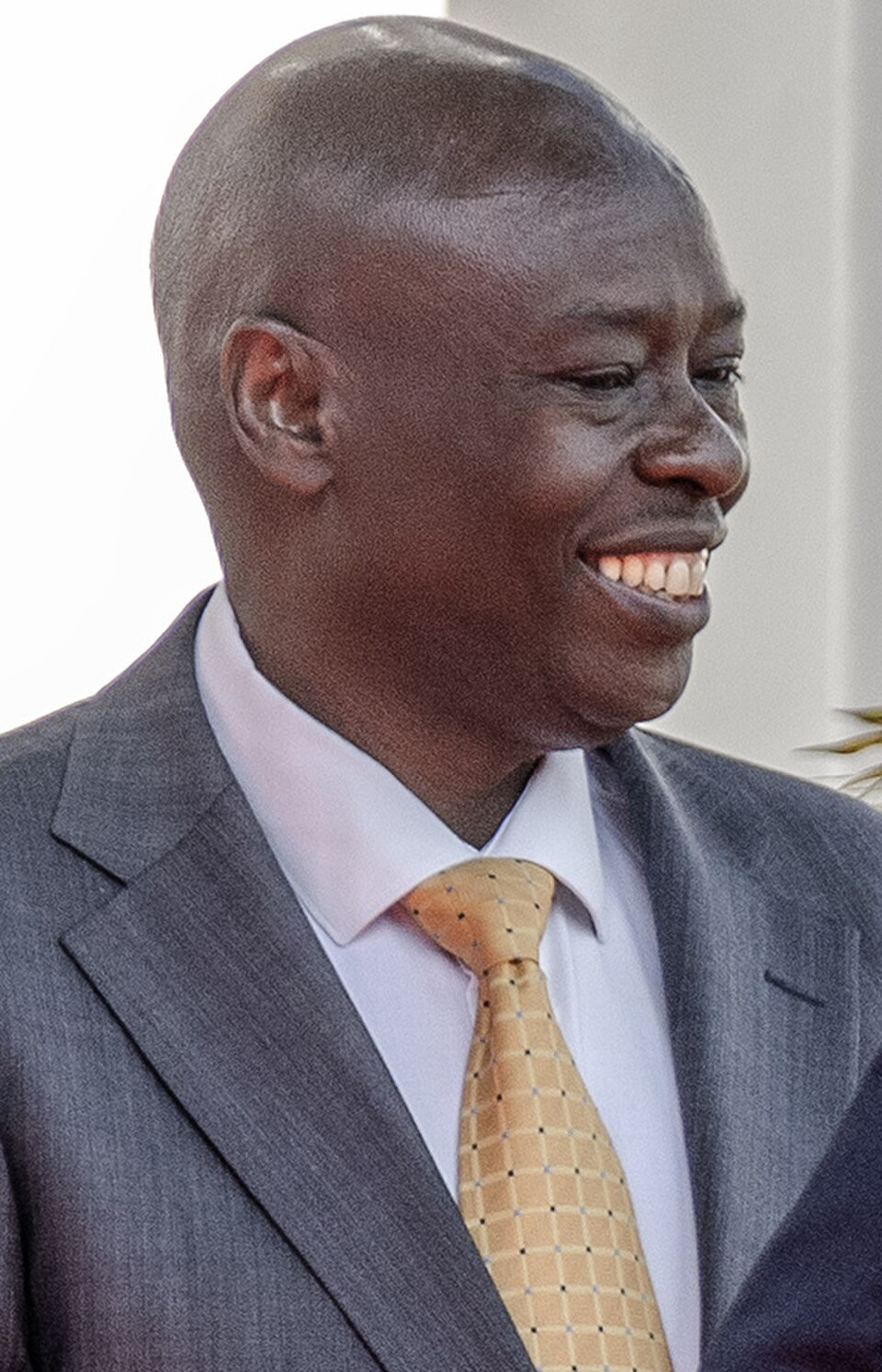
Geoffrey Rigathi Gachagua, popularly called Riggy G, is a prominent Kenyan politician and businessman who was the 2nd Deputy President of Kenya from 13th September 2022 to 17th October 2024 when he got impeached by the county assembly. He has been a controversial and significant figure as a self-described “truthful man.
Early life and education are not a focus of this grade level.
Place of Birth: Hiriga village, Mathira Constituency, Nyeri County on February 28, 1965.
Heritage was born the eighth child of the Mau Mau freedom fighters, Nahashon Gachagua Reriani and Martha Kirigo. His older brother Nderitu Gachagua was the first Governor of Nyeri County, who passed away.
Primary School: Was a student of Kabiruini Primary School from 1971 to 1977.
High School: studied at Kianyaga High School for his O-level and A-level (1978-1983).
University: BA Political Science and Literature from the University of Nairobi (1985 – 1988).
Civil Service and Early Career
Administrative & Paramilitary Training: Successfully finished administration police and paramilitary training in 1990 at the Administration Police Institute.
District Officer (D.O.): served as a District Officer Cadet and progressed to become a D.O. in several districts such as Kakamega, Ng’arua Division (in Wajir), Kirinyaga and Wajir.
Kenyatta’s Personal Assistant: Worked closely behind the scenes as the Personal Assistant to Uhuru Kenyatta between 2001 and 2006 when Kenyatta was the Minister for Local Government.
Business Venture: Mid-2000s – became private businessman, director of Ridor Group of Companies.
The political ascent and Deputy Presidency.
MP: Joined elective politics in 2017 and was elected as the Mathira MP on the Jubilee Party ticket.
Ruto’s Running Mate: Chosen by William Ruto as his running mate for the 2022 general elections in August under the United Democratic Alliance (UDA).
After winning the victory he ascended to the position of the Deputy President on 13th September 2022. His job as Deputy President was given a heavy emphasis on the fight against brew traders, agricultural reforms for the tea, coffee and milk growers and being the self-appointed political kingpin in the Mt Kenya region.
Impeachment and Recent Developments
Ouster: On October 17, 2024, the Senate voted overwhelmingly to remove him from office on several charges, such as gross violation of constitution and inciting ethnic division, from the National Assembly’s impeachment motion. Daily Nation +1
Post-Impeachment: He has challenged the removal in court, but it has been upheld. Gachagua is still a key player in political realignments, with the launch of the DCP Kenya party on May 15, 2025, with him as the party leader.
Personal Life
He is married to the corporate leader and minister, Pastor Dorcas Wanjiku Rigathi, who has been active in the boy child and vulnerable groups causes. They have two sons, Kevin and Keith.